May 30, 2022
By Valeria Marulanda Dávila
Senior Advisor at Opportunitas Advisor
Colombia tuned to change, trapped in populism
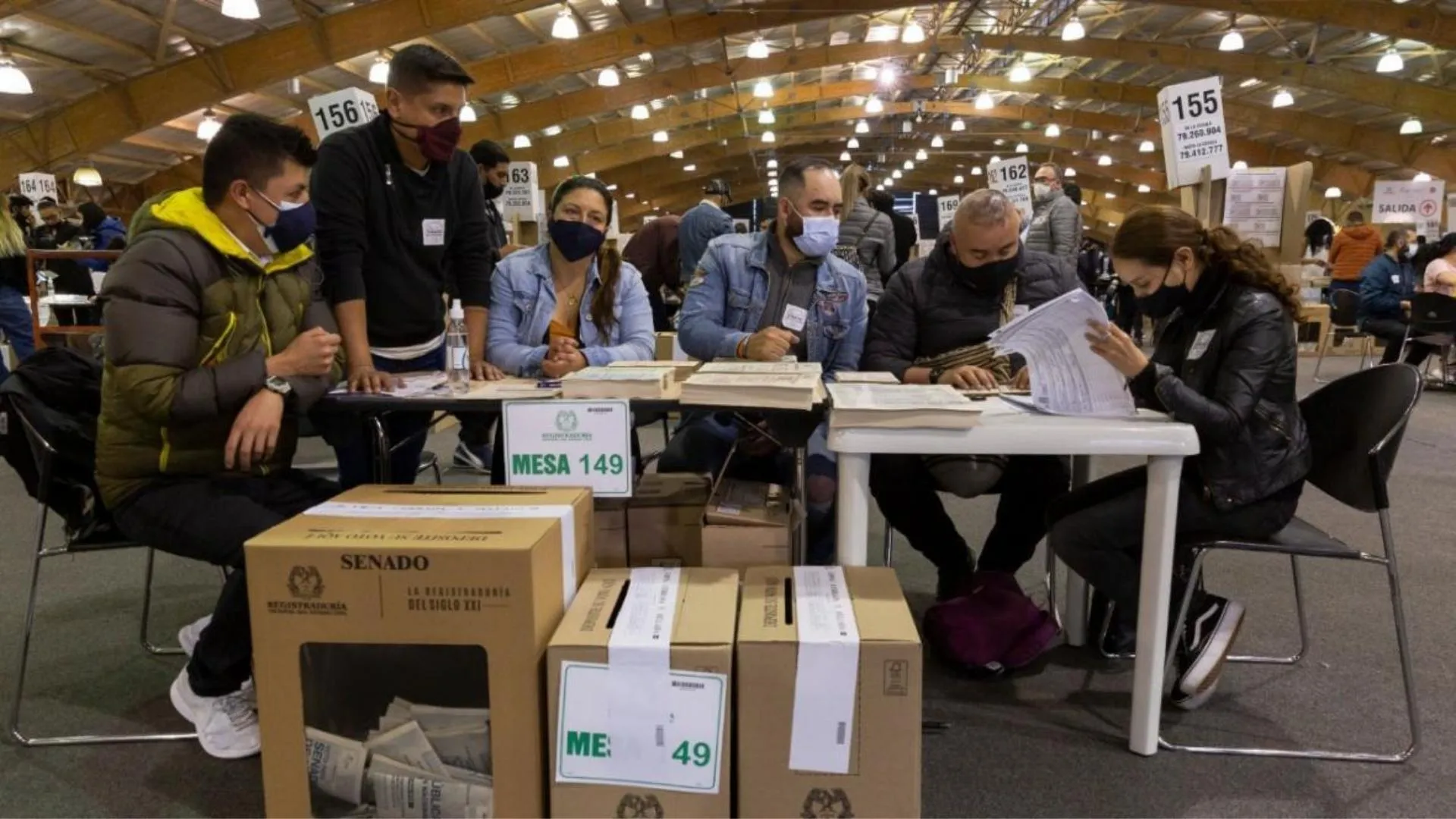
With these results, Colombians showed clear dissatisfaction with the current situation and the political establishment, voting massively for a change. The results are in line with recent surveys on Colombians perceptions of their country, in which 74.1% say Colombia is on the wrong track, in addition to a growing unfavorable image and distrust of the South American nation’s democratic institutions.
The perceived establishment candidate Federico Gutiérrez did not manage to position a strong message, nor distance himself from the Government of President Ivan Duque, nor from the uribismo political movement, reaching just 23.87% of the votes. His vote share is a clear sign that in the final stretch of the campaign, Hernández was successful in swaying voters away from Gutierrez and convincing them to vote for him as another anti-establishment option.
Hernández has a better chance of beating Petro than Gutiérrez did, and much of the anti-Petro vote understands this. In the final days of the campaign, Gutiérrez behaved as if he were leading the polls and focused on a message of unity, when instead he should have been using his bully pulpit to publicly sharpen his ideological and policy differences with Petro.
For his part, the candidate from the center, Sergio Fajardo, who for weeks had been on a downward path in the polls, reached only 4.21% of the vote. The internal fights between the different candidates of his Coalition of Hope, and the lack of a clear message in an increasingly polarized political environment reduced his strength. Likewise, the fact that Fajardo did not take strong positions on issues weakened him because in the end the voters sought out candidates with more forceful positions on issues.
Petro, adopted a much more moderate speech in this election than he did four years ago and surrounded himself with politicians who have supported or participated in previous governments including that of former President Juan Manuel Santos and Ernesto Samper. On this election his position produced less fear and therefore managed to largely capture the voters who want change. Petro got 8,515,000 votes, about 500 thousand votes more than he got in the 2018 second round, which could show that he is close to his ceiling and still far away from 50 percent plus one he needs to become president.
For his part, Rodolfo Hernández, who was the big surprise in this election positioning himself as the true “outsider”, managed to capture not only a good portion of the anti-Petro vote, but also the vote of frustrated Colombians tired of the political establishment and traditional politicians. Using simple rhetoric focused on rooting out corruption, ending traditional politics, adopting austerity measures, and promising to govern with authority to achieve results, all wrapped in a package laced with sympathy, he managed to capture the vote of 5,948,162 million Colombians.
Hernández ran an innovative campaign. His tactics concentrated on using social media and traditional media appearances, shunning the traditional big national events across the country, demonstrating, once again, that for presidential elections, large crowds are not a sign of electoral strength. His campaign also showed that not having a formal structure or political machine in place, might not be a weakness after all to achieve the Colombian presidency.

For the private sector, the results of the first-round election show that the majority of Colombians want change with a hope of a better future, regardless of economic growth and other indicators. These results create even more uncertainty for the future of Colombia. Additionally, faced with an uncertain global outlook, with higher inflation, higher interest rates, a possible economic slowdown, and food shortages, in an impoverished country with ever-widening social gaps due to the pandemic, the next president of Colombia will have incentives to adopt populist and interventionist policies, regardless of their campaign promises.